

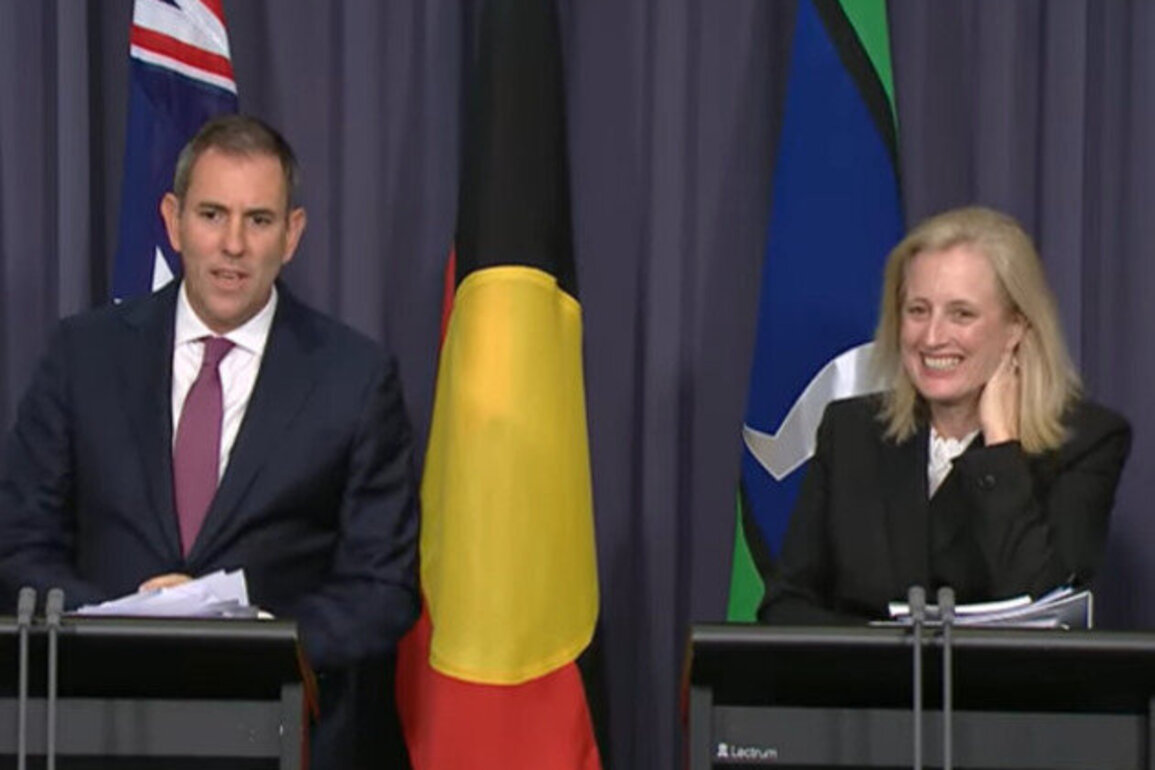
From economic wreckage to recovery, Chalmers and Gallaghers budget repair stands as Labors quiet triumph, writesStephen Koukoulas.
WHEN THE LABOR PARTY won the May 2022 Election, one of its commitments was to repair the budget.
A near decade of budget mismanagement from theAbbott,TurnbullandMorrisonCoalition governments, plus the extraordinary but necessary costs of dealing with all aspects of the COVID pandemic, left the Commonwealth Governments financial position in a fragile position.
Three and a half years on from Labors election win, one of the critical achievements of Labor, led by TreasurerJim Chalmersand Finance MinisterKaty Gallagher, is delivering on the commitment to fix the Governments finances.
Two budget surpluses and considerably lower budget deficits in the other years, and a sharp fall in net government debt, are the result of prudent fiscal management.
The final budget of the Coalition Government, delivered by then TreasurerJosh Frydenbergin March 2022, had the following profile for the budget deficit and government debt:
(Data source:Budget papers)
Under the stewardship of Chalmer and Gallagher, the budget repair has been, frankly, extraordinary.
Contrast the position budgeted for by the Morrison Government and Frydenberg in the above table with the results below from the May 2025 Budget, which includes forecasts for 2025-26.
(Data source:Budget papers)
The difference in the budget position left by the Coalition and what Labor has achieved, which totals close to $200 billion in just four years, parlays directly into the level of net government debt. As a percentage of GDP, net government debt is a staggering 10 per cent and more below the wreckage of the last Coalition budget.
This has fed directly into lower levels of borrowing, which has lowered the interest the Government has had to pay on its debt, whilst helping to maintain the triple-A credit rating of Australia, both of which have seen a materially lower level of interest costs in the budget.
This has freed up revenue to fund health and education, to cut taxes and lower student debt.
TheMid-Year Economic and Fiscal Outlookis due for release in the middle of December. It will provide an update on the budget position based on decisions taken since the 2025 Budget and it will be adjusted for updated economic forecasts based on the unfolding trends in the last six months.
It is likely to show a materially lower budget deficit for 2025-26.
Budget datapresented by the Department of Finance up to September 2025, one full quarter into the financial year, shows the underlying cash deficit for 2025-26 is running $5.3 billion below the rate expected in the budget. If sustained, it would point to a full-year deficit of around $20 billion, roughly half that expected at budget time and close to a puny 0.7 per cent of annual GDP.
The $1 trillion truth: Coalition to blame for Australias soaring debtAs gross government debt nears $1 trillion, the numbers reveal a confronting truth most of it was racked up by Coalition governments.
While the pace of economic growth has been sluggish since the Budget, the improvement in the bottom line is linked to higher-than-expected commodity prices, stronger household spending and employment.
A phase out or end to many of the government projects that were part of theAlbaneseGovernments first term agenda is also helping to rein in the deficit. Much of the hiring and one-off jumps in pay for health care professionals in aged care and linked to theNational Disability Insurance Scheme(NDIS) and education sectors, for example, have been delivered.
These expenses are unlikely to be repeated or needed in the next few years, which will help the Budget's bottom line.
In the end, Australias budget position has improved markedly in the last few years and remains a gold-standard benchmark for other countries.
The need to consolidate the improvements in the bottom line budget position is important, particularly if the economic recovery gains momentum into 2026, commodity prices remain above expectations and the labour market remains firm.
Tax policy that collects the revenue needed to fund the essential reforms and to cover contingencies, all the while keeping the Budget near balance, is the priority for Chalmers and Gallagher in the MYEFO and, more importantly, in the 2026-27 Budget in May 2026.
If the first three and a half years are any guide, the outlook is encouraging.
Stephen Koukoulasis one of Australias most respected economists, a past chief economist of Citibank and senior economic advisor to an Australian Prime Minister.You can follow Stephen/X@TheKouk.
Related Articles
- Labor set to make the big reforms in its third term
- Get ready for a Chalmers offensive: Reform will be a big win for Australia
- Why Chalmers won't be baited by media misreporting the economy
- Treasurer avoids hard reforms on regional bank closures
- Business is booming defying newsroom doom and gloom